In the evolving landscape of modern warfare, a new battlefield has emerged one where victory is measured not in territorial gains but in viral impressions, retweets, and algorithmic dominance. The Islamic Republic of Iran, a nation historically portrayed in Western media as a rigid theocracy hostile to popular culture, has quietly executed one of the most remarkable strategic pivots in contemporary information warfare. Through a sophisticated deployment of AI-generated content, Lego-style animations, and culturally fluent internet satire, Iranian content creators have managed to outmaneuver the world’s most powerful media superpower on the very platforms it once dominated.
The Wall Street Journal, in a remarkable admission, acknowledged that Iran has gained the upper hand in the “war of narratives” against both the United States government and Israel, achieving this advantage through the production and strategic distribution of Lego-style videos across social media platforms. This development represents far more than a curious internet phenomenon; it signals a fundamental transformation in how geopolitical influence is projected, contested, and ultimately won in the digital age. The implications extend well beyond the immediate Iran-US confrontation, offering a blueprint for any nation or non-state actor seeking to challenge established power structures through asymmetric informational strategies.
The Architecture of Iran’s Digital Offensive
A. The Genesis of Explosive Media
The story of Iran’s meme warfare success cannot be told without examining the rise of Explosive Media, a Tehran-based outlet that has become synonymous with the regime’s most viral content. According to assessments by Rapid Response Mechanism Canada, Explosive Media is likely linked to Saeed Jalili, the Representative of the Supreme Leader at Iran’s Supreme National Security Council. This connection, while denied by the outlet itself which presents as an independent media organization soliciting cryptocurrency donations underscores the strategic importance Tehran places on this new form of warfare.
Explosive Media’s trajectory offers a masterclass in audience targeting and content optimization. Established on Telegram and Instagram in June 2025, the outlet initially produced Farsi-language videos featuring human hosts discussing the “12 Day War,” receiving minimal engagement and views. This initial phase, characterized by conventional propaganda approaches, failed to generate the viral traction that would later define the operation. Everything changed on March 7, 2026, when Explosive Media pivoted to English-language generative AI videos featuring Lego-style figures. The transformation in engagement was immediate and dramatic, with the videos rapidly accumulating high view counts among Western audiences.
B. The Scale of Digital Engagement
The quantitative metrics surrounding this campaign are staggering by any measure. RRM Canada estimates that at least 83 million users globally viewed Explosive Media’s AI Lego-style videos during the first month of the US-Iran conflict in March 2026. However, this figure likely understates the true reach, as the content was frequently removed by platforms for violating terms of service a removal that paradoxically amplified interest through re-uploads and media coverage. The overall estimate suggests that approximately 200 million users viewed at least one AI Lego-style video during that single month.
The distribution strategy was equally sophisticated. Following the initial traction, Explosive Media expanded its presence across an impressive array of platforms, including Facebook, Instagram, TikTok, YouTube, Rumble, Threads, BlueSky, Spotify, and SoundCloud. This multi-platform saturation ensured that content could reach diverse audience segments regardless of their preferred social media ecosystems. The engagement metrics on TikTok consistently outpaced all other platforms, reflecting the visual and entertainment-oriented nature of the content.
Understanding the Strategy: Why Lego and Why AI
A. The Trojan Horse of Nostalgia
The choice of Lego as the primary aesthetic medium for Iran’s propaganda offensive represents a calculated psychological strategy rather than an arbitrary creative decision. Analysts have characterized Lego animation as a form of “Trojan horse” a familiar, attractive, and non-threatening format that effectively lowers the initial resistance of Western audiences to political messaging. Lego, as a universal cultural symbol associated with childhood creativity and innocent play, carries none of the threatening connotations that typically accompany state-sponsored propaganda. This playful and nostalgic nature creates an entry point that traditional political communication cannot achieve.
The strategic genius of this approach lies in its subversion of expectations. Viewers who might instinctively dismiss content emanating from Iranian state sources find themselves engaged before they realize the nature of the message. The Lego aesthetic functions as a kind of perceptual camouflage, allowing anti-US and pro-justice narratives to infiltrate mainstream Western popular culture through a medium that seems harmless and even endearing.
B. The Speed and Scale of AI Production
The integration of artificial intelligence into content production has fundamentally altered the economics and tempo of propaganda warfare. Unlike previous eras, when producing 3D animations could take months of labor-intensive work, young Iranian creators are now reportedly using AI models largely trained on Western content to produce cinematic-quality videos within hours and release them in response to real-time events. This agility and rapid updating capability constitute a strategic advantage in a battle where every second can shift public opinion.
The rapidity of response is particularly significant in the context of modern news cycles. When the White House posts content, Iranian creators can respond with counter-content within hours, inserting their narrative into the same conversations and trending topics that the original content generated. This real-time engagement ensures that Iranian perspectives remain part of the discourse rather than being relegated to delayed responses that lose relevance.
C. Deep Cultural and Subcultural Fluency
Perhaps the most critical element of Iran’s digital success is the profound cultural fluency of its content creators. The anonymous individuals behind these animations are often described as belonging to a younger generation intimately familiar with American cultural references, including figures such as Jeffrey Epstein, the Vietnam War, and various political scandals involving Donald Trump. This fluency allows them to target themes that resonate across the American political spectrum from the far right to the liberal left producing content with high viral potential.
The memes are described as fluent not just in English but in American culture and trolling. They reference the bruising on Trump’s hand that sparked health speculation, infighting within the MAGA base, and even Defense Secretary Pete Hegseth’s confirmation hearing. This granular understanding of American political subtext enables content that feels native to American internet culture rather than foreign propaganda, dramatically increasing its shareability and credibility among target audiences.
The Tactical Playbook: From Embassy Trolling to Viral Animation
A. Diplomatic Accounts as Satirical Weapons
Iran’s diplomatic missions abroad have been transformed from staid diplomatic outposts into weapons of satirical warfare. When President Trump threatened to destroy Iranian civilization, the response from one Iranian embassy was not a condemnation or counterthreat but a scheduling request: “8PM is not so good. Could you change it to between 1 and 2PM or if possible, 1 and 2AM?”. When Trump later delivered an expletive-laden demand that Tehran open the Strait of Hormuz, the response was a joltingly deadpan: “We’ve lost the keys”.
The Iranian embassy in South Africa has emerged as one of the diplomatic network’s stellar performers. After Trump agreed to a ceasefire, the embassy posted a taunting clip of a brown dog staring confusedly into the camera a long-time staple of internet memes with the caption: “Those who were waiting last night for Iranian civilisation to be destroyed”. Another notable post showed Donald Trump attired as a 1980s rock star with bouffant hair, singing a spoof of Desireless’s “Voyage Voyage,” renamed “Blockade,” and playing keyboards. Within 24 hours, it had accumulated more than 45,000 likes.
B. The Lego Animation Arsenal
The Lego animations themselves have evolved into a sophisticated genre with recurring characters, narrative arcs, and thematic consistency. One particularly popular video depicts a plastic Donald Trump sweating over a ceasefire request that goes ignored. He holds a sign reading “VICTORY!” but as the camera pans, his pants are on fire, and the sign turns out to read “I am a loser”. Another shows Lego Trump tumbling through a whirlwind of documents related to disgraced financier Jeffrey Epstein while a soundtrack intones, “the secrets are leaking, the pressure is rising”.
The first video of the campaign appeared in early March 2026, shortly after the US and Israel launched coordinated military operations. In colorful and fast-paced animations, Trump and Netanyahu were depicted as internationally recognizable Lego figurines whose yellow bobbleheads drip with sweat after Iranian forces fire plastic missiles at the White House and Tel Aviv. Trump, with brows furrowed and mouth agape, stands next to Netanyahu and a Lego devil, inspecting photos of himself in the Jeffrey Epstein files. These portrayals are designed to entertain, but with subversive intent the idea is to mock the two leaders while subtly demonizing them.
C. The Epstein Connection and Other Recurring Themes
The Jeffrey Epstein scandal and the notion that Trump started the war to distract from revelations about his former friend has become a constant theme in Iranian propaganda. Other recurring taunts allege that Trump was tricked by Israel into waging the war and that the president and his officials are trying to profit from it. Another favorite theme is the taco, an acronym for “Trump always chickens out”.
The targeting of themes that resonate across the political spectrum is a deliberate strategic choice. By focusing on issues like the Epstein files, the Vietnam War, and various Trump scandals, Iranian creators maximize the potential for their content to be shared by Americans across ideological lines. The goal, as one analysis notes, is to sow enough discontent with the conflict as to eventually force the West to cave in.
The American Response and Its Limitations
A. The White House’s Meme Production
The United States has not been entirely passive in this digital conflict. The Trump administration has produced its own prodigious output of memes and AI-generated content, attempting to convey military superiority and leaning on American cultural staples in TikTok-style videos. These videos splice footage of missile strikes in Iran with overlays of video games, movie clips, and children’s cartoons. A senior White House official claimed that over a four-day period, the videos they released had over 3 billion impressions.
However, the American approach differs fundamentally from the Iranian strategy in several crucial respects. Unlike the American content, which tends to come from government accounts, the Iranian Lego videos originated from seemingly independent channels like Explosive Media, allowing for plausible deniability and greater credibility among audiences skeptical of official messaging. Furthermore, the White House has narrowly targeted Trump’s base with its content, limiting its reach to audiences already predisposed to support the administration’s narrative.
B. The Structural Gap in US Defense
The United States, according to former intelligence officials, is not well postured to address foreign influence campaigns like the Iranian effort campaigns that are nimble, culturally savvy, and not fundamentally deceptive. Traditional counter-propaganda approaches assume a clear distinction between truth and falsehood, between legitimate information and disinformation. The Iranian campaign complicates this framework by operating largely in the realm of satire, humor, and opinion rather than outright fabrication.
As Jessica Brandt, who previously led the US intelligence community’s efforts to mitigate foreign influence threats, has pointed out, Iran’s approach represents a problem precisely because it does not fit neatly into existing categories of foreign malign influence. The content is often clearly labeled as AI-generated, the humor is transparent, and the opinions are evident. Yet it is effective because it resonates with genuine grievances and anxieties within American society, amplifying existing divisions rather than creating new ones from whole cloth.
The Broader Implications for Information Warfare
A. The Attention Economy as Battleground
Modern wartime propaganda is no longer judged solely by how persuasive, coherent, or factually grounded it is. Increasingly, it must compete in the attention economy the finite pool of human attention that is contested by sports highlights, influencer content, celebrity gossip, and countless other stimuli. Attention follows very different rules to persuasion. A carefully reasoned official statement may be strategically sound, factually accurate, and diplomatically measured, but if nobody watches it, its practical effect is negligible.
Iran’s success in this environment stems from its recognition that virality, not veracity, is the currency of contemporary information warfare. The goal is not necessarily to convince audiences of a particular position but to occupy their mental real estate, to become part of the conversation, to shape the emotional tone and narrative frame through which events are interpreted.
B. The Democratization of Propaganda Tools
The Iranian campaign demonstrates how AI and social media have democratized the tools of propaganda, enabling relatively resource-constrained actors to compete effectively against media superpowers. The vast disparity in military spending between Iran and the United States the latter’s defense budget exceeding $800 billion annually while Iran’s struggles to reach $25 billion is not reflected in the digital domain. A single viral video produced with freely available or low-cost AI tools can reach more viewers than a multimillion-dollar television advertising campaign.
This asymmetry has profound implications for international relations and conflict resolution. If military superiority no longer guarantees narrative dominance, and if public opinion in democratic societies can be shaped by foreign actors with minimal resources, the calculus of war and peace shifts in unpredictable ways.
C. The Blurring of Entertainment and Propaganda
The Iranian campaign illustrates the ongoing blurring of boundaries between entertainment and propaganda. Traditional propaganda was identifiable by its form the seriousness of official pronouncements, the recognizable aesthetics of state media. In the new information environment, propaganda dresses itself in the clothes of entertainment, adopting the formats, styles, and conventions of viral internet content. This blurring makes it increasingly difficult for audiences to distinguish between content designed to inform, to entertain, and to persuade.
The implications extend beyond wartime contexts. As AI tools become more accessible and social media platforms continue to prioritize engagement over accuracy, the potential for foreign and domestic actors to shape public perception through entertaining content will only grow.
The Gen Z Factor: Iran’s Unlikely Digital Warriors
One of the most surprising aspects of Iran’s social media success is that it has been achieved, in part, by engaging the very demographic that Western observers might expect to be most alienated from the Islamic Republic. Iran’s Generation Z young people who have grown up with the internet, who chafe under domestic restrictions, and who have participated in protests against the regime have nevertheless contributed their talents to the nation’s digital offensive.
The Guardian has described how Iran’s Gen Z “digital fighters” have been deployed to engage Western audiences with satire and mockery of the Trump administration. The anonymity of the internet allows these young creators to contribute to national propaganda efforts without necessarily endorsing the regime’s domestic policies. The war has, paradoxically, created a space for patriotic expression that transcends political grievances.
This phenomenon suggests that national identity and digital fluency can combine in unexpected ways during periods of external conflict. The Iranian regime has managed to harness the skills and cultural knowledge of a generation that is otherwise politically disaffected, channeling their energies toward external adversaries rather than internal dissent.
Conclusion: A New Paradigm of Conflict
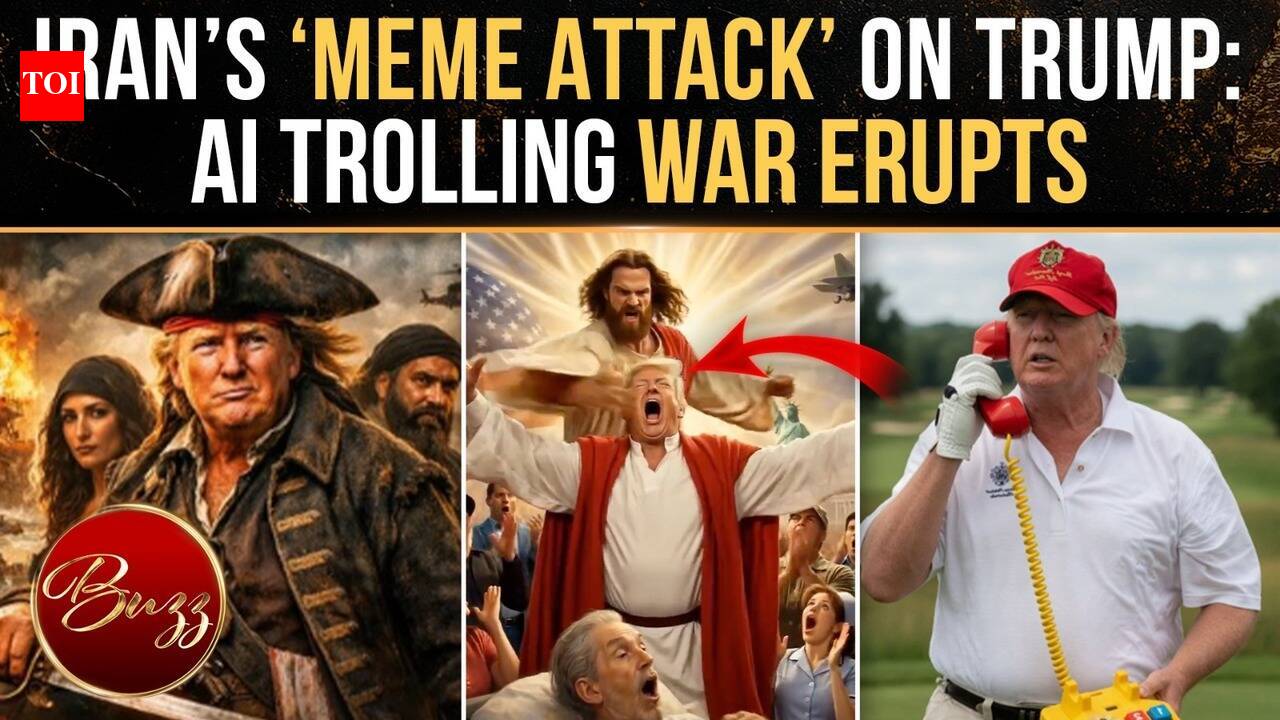
The Iranian meme machine’s success against the United States represents far more than a temporary advantage in a specific conflict. It signals the emergence of a new paradigm of international competition in which soft power, cultural fluency, and digital agility matter as much as military and economic might. The nation that once seemed most vulnerable to Western cultural influence has turned the tools of that influence against its adversaries, demonstrating that the internet is not inherently a force for liberalization or Americanization but rather a neutral medium that can be wielded by any sufficiently skilled actor.
For the United States, the lessons are sobering. The world’s largest economy and most powerful military has been outmaneuvered in the domain of narrative construction by a nation with a fraction of its resources. The American response, while substantial in volume, has lacked the cultural fluency, platform agility, and virality of the Iranian campaign. The White House’s targeted messaging to Trump’s base, while effective within that constituency, has failed to reach broader audiences or to counter Iranian narratives in the spaces where they proliferate.
The long-term consequences of this shift remain uncertain. Will the Iranian approach serve as a model for other nations and non-state actors seeking to challenge American power? Will social media platforms develop new mechanisms to counter foreign influence campaigns that masquerade as entertainment? Will the United States adapt its information warfare strategies to meet the challenge, or will it continue to operate within outdated frameworks that assume a clear distinction between propaganda and entertainment?
What is certain is that the battlefield of the future will be contested as fiercely in the digital realm as in the physical. The era in which military dominance automatically translated into narrative dominance has ended. In its place, a new competition has begun one in which creativity, cultural intelligence, and algorithmic savvy may prove more decisive than firepower. The Iranian meme machine has not simply beaten the United States in a social media skirmish; it has fundamentally altered the rules of engagement for all future conflicts.