
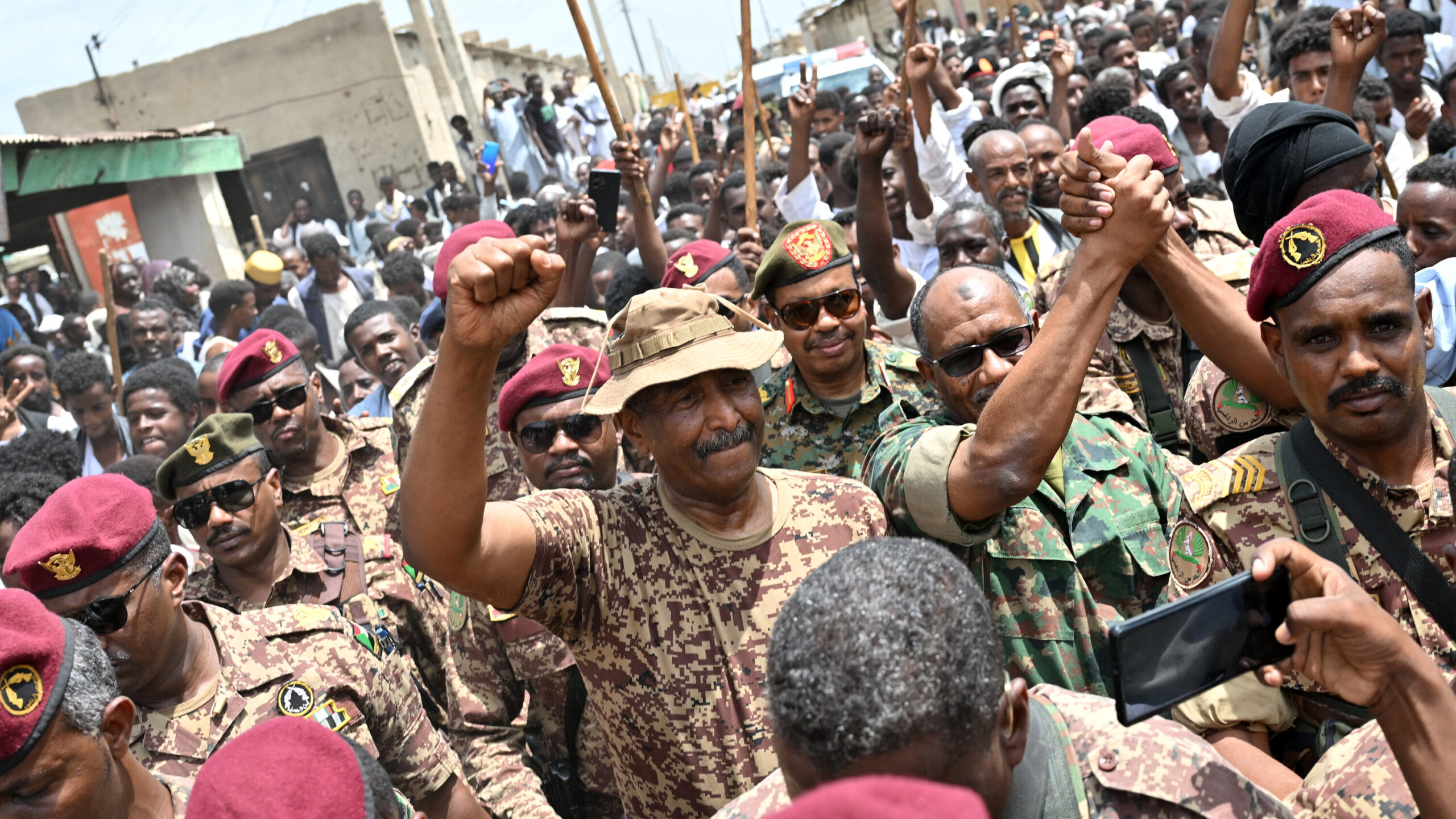
Sudan’s devastating civil war has entered a dangerous new chapter. What began in April 2023 as a power struggle between the Sudanese Armed Forces (SAF) and the paramilitary Rapid Support Forces (RSF) has transformed into a conflict defined by the relentless and increasingly sophisticated use of armed drones. These unmanned aerial vehicles, once a marginal tool in the arsenal of both warring parties, have now become the primary weapon of mass civilian harm, reshaping the battlefield and bringing terror to cities far from traditional front lines.
The capital region comprising Khartoum, Omdurman, and Bahri has found itself squarely in the crosshairs of this new form of warfare. Drone strikes have targeted airports, military installations, power stations, and residential neighborhoods, shattering whatever fragile calm had begun to return to the capital after the army recaptured it from the RSF in March 2025. This article examines the escalating drone campaign against Sudan’s capital cities, its devastating impact on civilians, the murky web of foreign involvement, and the urgent warnings from the international community.
A New Phase of Warfare: Drones Take Center Stage
The trajectory of drone warfare in Sudan has been nothing short of alarming. According to the United Nations Human Rights Office, armed drones accounted for more than 80 percent of all conflict-related civilian deaths in Sudan between January and April 2026, claiming at least 880 lives. UN Human Rights Chief Volker Türk declared that “armed drones have now become by far and away the leading cause of civilian deaths” in the conflict. This represents a dramatic shift in the nature of the war, one that has profound implications for civilian protection and the prospects for peace.
The escalation is not accidental. Both the SAF and the RSF have invested heavily in acquiring and deploying drone technology, with foreign powers playing an increasingly visible role in supplying these weapons. The result has been a proliferation of aerial attacks that reach deep into territory previously considered safe, spreading violence from the Kordofan and Darfur regions into Blue Nile, White Nile, and the capital itself.
Analysts note that drones have emerged as a “force multiplier” on the battlefield, enabling ground offensives, weakening enemy defenses, and allowing both parties to project power across vast distances. The data tells a stark story: at least 2,670 people were killed in drone-related incidents in 2025 alone, marking a 600 percent increase in drone-related deaths compared to the previous year.
The Capital Under Siege: Key Drone Attacks on Khartoum, Omdurman, and Bahri

The capital region has experienced a series of high-profile drone attacks that have disrupted daily life, damaged critical infrastructure, and killed civilians. Understanding these incidents is essential to grasping the scale of the crisis.
A. The Khartoum International Airport Strike (May 2026)
On May 4, 2026, a drone struck an area inside Khartoum International Airport, triggering explosions and sending plumes of smoke across the city. Sudanese air defenses intercepted multiple drones targeting the airport and two military sites—the Signal Corps in Bahri and the Al-Markhiyat camp north of Omdurman. Eyewitnesses reported three consecutive explosions in eastern Khartoum, with some projectiles landing in nearby residential neighborhoods. Authorities closed the airport for 72 hours as a precautionary measure. This attack shattered the relative calm that had prevailed in Khartoum for months, as increasing numbers of civilians had been returning to the capital.
B. The Five-City Coordinated Strike (August 2026)
On August 12, 2026, the RSF launched coordinated drone attacks targeting five cities across Sudan: Omdurman and Bahri in the capital region, Atbara and Al-Damar in River Nile State, and El-Obeid in North Kordofan State. Witnesses described swarms of drones flying over Omdurman and Bahri before army air defenses engaged them, with explosions heard in several areas. Anti-aircraft fire echoed across Atbara and Al-Damar, while the army shot down a drone over El-Obeid. This attack demonstrated the RSF’s growing capacity to strike multiple targets hundreds of kilometers apart simultaneously.
C. The Second Consecutive Day of Attacks (August 2026)
The following day, August 13, paramilitary drones attacked Khartoum for the second day in a row. An AFP correspondent reported the firing of anti-aircraft missiles from Omdurman, followed by explosions. Witnesses in central Khartoum and Khartoum North reported seeing drones in the sky and hearing explosions. The army source stated that “military air defences engaged with the militia’s drones and downed them”.
D. The September 2025 Infrastructure Campaign
In September 2025, drones launched by the RSF targeted vital installations across the capital region, including the country’s main oil refinery, power stations in Bahri and Omdurman, and a fuel depot in southern Khartoum. The attacks left widespread areas without electricity, demonstrating the RSF’s strategy of targeting critical infrastructure to inflict maximum suffering on civilians.
E. The October 2025 Suicide Drone Wave
In October 2025, Sudanese air defenses intercepted more than 11 suicide drones targeting military areas and residential neighborhoods in northern Omdurman and far northern Bahri. The strikes concentrated on the Shadoul camp, a military intelligence facility in Bahri, and a military site in the Jabal Surkab area of northern Omdurman. This wave of attacks underscored the RSF’s willingness to deploy suicide drones essentially flying bombs against both military and civilian targets.
The Human Cost: Civilians Caught in the Crossfire
The human toll of Sudan’s drone war is staggering and continues to mount. The UN Human Rights Office documented at least 880 civilian deaths from drone strikes in the first four months of 2026 alone. In 2025, the number of civilians killed in the conflict more than doubled compared to the previous year, with UN High Commissioner for Human Rights Volker Türk noting that his office’s documentation pointed to “over a two and a half times increase in killings of civilians”.
A. Attacks on Schools and Hospitals
Perhaps most disturbing is the systematic targeting of civilian infrastructure. On December 4, 2025, at least three separate drone strikes hit the town of Kalogi in South Kordofan. Two drones struck a kindergarten Al-Hanan Kindergarten while a third hit a hospital where the injured were being treated. The death toll from these attacks reached 114 people, including 63 children, with approximately 71 injured. The Arab League condemned the attacks as “war crimes” and called for independent investigations.
The UN High Commissioner for Human Rights reported that during a four-month period in 2026, health facilities were struck at least 12 times, forcing some to close their doors and compelling civilians to travel long distances for medical care or go without it entirely. Markets were also repeatedly targeted, with at least 28 such attacks resulting in civilian casualties.
B. Displacement and Humanitarian Crisis
The relentless drone campaign has triggered massive displacement. The International Organization for Migration reported that over 2,600 people were displaced in North Kordofan and some 1,000 in South Kordofan in a single week in May 2026. Since the start of the war, nearly 9 million people have been internally displaced within Sudan, while approximately 4.5 million have fled to neighboring countries.
The humanitarian situation continues to deteriorate. UN spokesperson Stephane Dujarric emphasized that “the insecurity is forcing people to flee their homes” and reiterated that “parties must respect international humanitarian law at all times and that civilians and civilian infrastructure must be protected”. The High Commissioner warned that much of the country, including Kordofan, faces an increased risk of famine and acute food insecurity.
Foreign Involvement: A Proxy War in the Skies
The sophistication and scale of drone operations in Sudan point to significant external support. The Sudanese government has formally accused both Ethiopia and the United Arab Emirates of involvement in drone attacks targeting the capital.
A. Allegations Against Ethiopia and the UAE
Following the May 2026 attack on Khartoum International Airport, Sudan recalled its ambassador to Ethiopia for consultations. Foreign Minister Mohieddin Salem stated that Sudan had “recalled its ambassador to Ethiopia for consultations over the Emirati-Ethiopian drone aggression targeting Khartoum airport”. He claimed there was “conclusive evidence” that the attack was launched from Ethiopian territory and announced that Sudan holds both countries responsible, affirming its right to respond.
The UAE has consistently denied involvement in Sudan’s conflict, claiming it supports the country’s stability. However, the RSF has been widely accused of receiving Emirati weapons, and Sudan severed diplomatic ties with the UAE in May 2025 over these allegations.
B. The Flow of Advanced Weapons
Analysts note that both warring parties are being supplied by multiple countries in the Middle East and beyond. Nathaniel Raymond, executive director of the Humanitarian Research Lab at Yale School of Public Health, reported that satellite imagery shows the RSF using Chinese-made CH-95 and FH-95 drones “roughly the size of small aircraft”. The army and RSF are competing to obtain new drone models, with the RSF “increasingly competing to acquire newer, more sophisticated models”.
UN High Commissioner Türk called for “the adoption of robust measures to prevent the transfer of arms, including increasingly advanced armed drones, to the fighting parties”. He warned that “drone attacks against civilians and civilian objects will only worsen if they are met with utter impunity”.
International Response and Warnings
The international community has expressed alarm at the escalating drone warfare, but concrete action remains elusive.
A. United Nations Condemnation
UN Secretary-General António Guterres expressed deep alarm at reports of drone strikes killing civilians, including a strike in South Darfur that killed at least 30 civilians. The UN Human Rights Council has documented patterns of violence against civilians, including killings, rape, and torture, with violations of international law surging as fighting intensifies.
Volker Türk issued a stark warning in May 2026: “The international community is on notice that, unless action is taken without delay, this conflict is on the cusp of entering yet another new, even deadlier phase”. He noted that the increasing reliance on drones “allows hostilities to continue unabated in the approaching rainy season, which in the past has brought about a lull in ground operations”.
B. Calls for Arms Embargo
Sudanese civil society groups have called on the UN Security Council to extend its arms embargo on the country. A UN fact-finding mission documented more than 1,000 civilian deaths from drone strikes in the first five months of 2026. The Arab League has also condemned deadly drone strikes as war crimes and called for independent investigations and accountability.
Conclusion: A Nation at a Crossroads

Sudan stands at a perilous crossroads. The drone war that has engulfed its capital cities represents a fundamental transformation of the conflict one that has made civilians more vulnerable than ever before. The statistics are sobering: over 880 civilians killed by drones in just four months, thousands displaced, infrastructure destroyed, and a humanitarian crisis of epic proportions.
The international community has issued warnings, but words alone will not protect Sudanese civilians. The flow of advanced weapons into the country must be halted. The targeting of civilian infrastructure must be investigated and prosecuted as war crimes. And the parties to the conflict must be pressured to respect international humanitarian law.
As UN High Commissioner Türk warned, “This must not be allowed to happen”. The world has been put on notice. The question now is whether it will act before Sudan’s capital cities become synonymous with the devastating cost of modern drone warfare.