
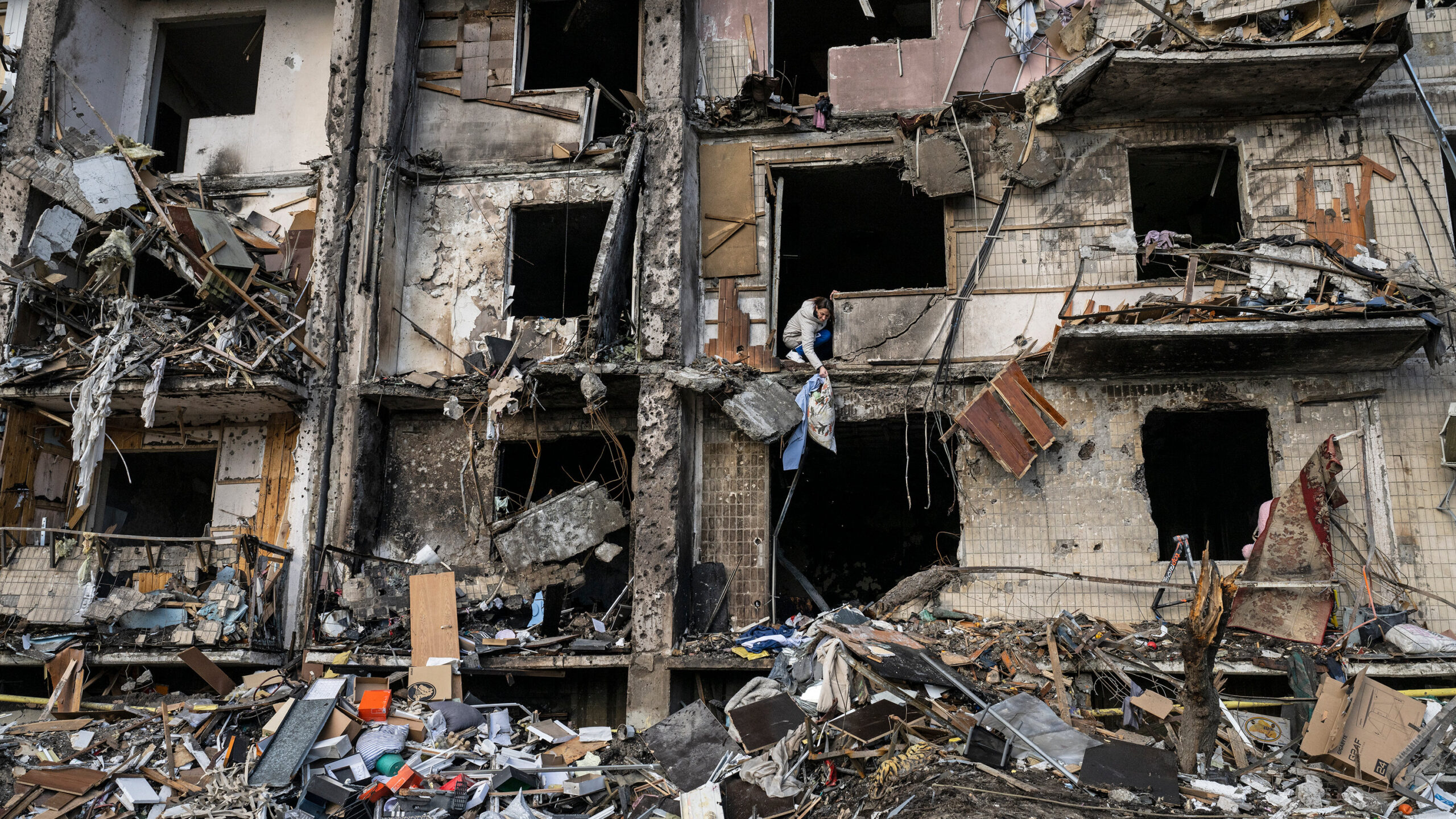
The year 2026 has brought unprecedented devastation to Ukraine’s eastern urban centers. As Russian forces intensify their offensive across the Donetsk region, cities that once served as bustling industrial hubs and cultural landmarks have been transformed into nightmarish war zones. Civilians face daily bombardment, drone attacks, and a humanitarian catastrophe of staggering proportions. This comprehensive analysis examines the current state of Ukraine’s frontline cities, exploring the military dynamics, humanitarian crisis, and the resilience of those who remain.
The Fortress Belt: Ukraine’s Last Eastern Stronghold
The so-called “Fortress Belt” represents Ukraine’s most critical defensive line in the Donbas region. This network of heavily fortified cities includes Sloviansk, Kramatorsk, Druzhkivka, and Kostiantynivka urban centers that have become the focal point of Russia’s determined campaign to seize full control of eastern Ukraine. The strategic importance of this belt cannot be overstated; capturing these cities would potentially open the door for Russian forces to advance westward across the remaining Ukrainian-controlled territory.
A. Sloviansk: The Ancient City on the Brink
Sloviansk, one of the oldest settlements in Donetsk Oblast with a history dating back to the 17th century, now faces an existential threat. The city has witnessed a dramatic escalation in attacks, transitioning from weekly glide bomb strikes to near-daily bombardment. Approximately 32,000 civilians remain in the city, with roughly 600 people fleeing the community each week as the security situation deteriorates. The human cost continues to mount, with residential areas and critical infrastructure suffering extensive damage. More than half of the high-rise buildings in the Sloviansk community have been damaged by enemy shelling, along with over 10% of private homes and a quarter of infrastructure facilities including hospitals and kindergartens.
B. Kramatorsk: A City Slowly Dying
Kramatorsk, which served as the de facto regional capital for Ukrainian-controlled Donetsk Oblast, has experienced a catastrophic decline. The population has plummeted from approximately 150,000 residents before the 2022 invasion to merely 30,000 today. The city’s markets, once vibrant centers of commerce, now operate under the constant threat of attack. Vendors arrive at dawn, enduring power and water outages, while the buzzing of first-person view drones overhead has become so routine that residents scarcely flinch.
The statistics paint a grim picture. Over the summer months, civilian casualties in Kramatorsk and Sloviansk surged dramatically, with the number of wounded increasing from 70 in June to 212 in August. The use of glide bombs heavy munitions weighing between 250 and 500 kilograms, with some reportedly reaching 1,500 kilograms has become Russia’s weapon of choice for urban destruction. On a single morning in late August, nine glide bombs targeted Kramatorsk, with seven striking civilian apartment blocks and wounding 24 people, including a two-month-old infant.
C. Druzhkivka: The Frontline Town Under Constant Attack
Druzhkivka, located just nine miles from advancing Russian positions, has become a symbol of civilian suffering in this conflict. The town’s streets are now covered with anti-drone nets, a desperate measure to protect remaining residents from the relentless aerial assault. The security situation has deteriorated so rapidly that local authorities describe scenes as “apocalyptic” as civilians struggle to evacuate under fire from enemy FPV drones.
The city has been transformed into a near-ghost town, with essential services collapsing and humanitarian access becoming increasingly perilous. The last supply convoys reach the remaining population under constant threat, and the evacuation of families with children has become a mandatory operation conducted by police officers who themselves come under drone attack during these missions.
D. Kostiantynivka: The Grey Zone
Kostiantynivka presents a particularly complex situation. Russian troops have infiltrated the strategic city, effectively transforming the entire urban area into a “grey zone” where neither side maintains full control. Ukrainian military presence has been reduced to a limited capacity, while Russia claims full control a claim that remains contested on the ground. This ambiguity creates an extraordinarily dangerous environment for civilians who remain trapped between competing forces.
Humanitarian Catastrophe: The Oleshky Starvation Crisis
While the world’s attention focuses on the dramatic battles in the Donbas, a silent humanitarian catastrophe is unfolding in Russian-occupied Oleshky. This town in the Kherson region has become a symbol of the weaponization of food and humanitarian access.
More than 6,000 civilians including approximately 200 children remain trapped in Oleshky without access to food or medical supplies since late May 2026. The last confirmed delivery of humanitarian aid reached the settlement on May 26, after which Russian forces have systematically blocked all attempts to resupply the population or allow civilians to evacuate.
The Council of Churches of Ukraine has issued urgent appeals to Pope Leo XIV, requesting intervention to save the residents from starvation. Ukrainian Foreign Minister Andrii Sybiha has stated unequivocally that Russia bears full responsibility for this humanitarian catastrophe, emphasizing that Moscow is the sole obstacle preventing evacuation operations and humanitarian access.
The situation in Oleshky represents a deliberate strategy of starvation as a weapon of war. Residents report that Russian FPV drones actively target anyone attempting to leave the settlement, effectively trapping the civilian population in a slow death. The international community has been unable to negotiate humanitarian corridors, despite the Red Cross expressing readiness to facilitate such operations.
The Drone War: A New Dimension of Urban Terror
The conflict in Ukraine’s cities has been fundamentally transformed by the proliferation of drone warfare. Both sides increasingly rely on unmanned aerial vehicles, creating a situation where the traditional front line has become irrelevant. Drones now reach far beyond immediate combat zones, placing entire urban centers under constant threat.
A. The “Human Safari” in Kherson
Kherson has earned the grim distinction of being the site of what locals call a “human safari.” The city, liberated by Ukrainian forces in 2022, remains separated from Russian-held territory only by the Dnipro River. Artillery fire crosses this waterway daily, while FPV drones hunt civilians above streets and neighborhoods. The threat is so persistent and systematic that attacks on civilians have become normalized as a form of deadly entertainment for Russian drone operators.
The Red Zone of Kherson areas within hundreds of meters of the river has become virtually uninhabitable. Russian glide bombs have added another layer of danger to an already desperate situation. Large portions of the city closest to the river have emptied as residents either flee or are evacuated by Ukrainian authorities. According to local officials, Russian attacks kill or injure up to 20 people in Kherson every single day.
B. The Expansion of the Kill Zone
The ACAPS Thematic Report from August 2026 documents the growing and intensifying use of drones along the front line, noting that this poses an evolving factor shaping military, civilian, and humanitarian dynamics. The “kill zone” has expanded well beyond immediate frontline areas, fundamentally altering how humanitarian organizations can operate.
This expansion has profound implications for civilian safety and humanitarian access. Evacuations, displacement, service availability, and humanitarian access are all significantly affected by this new reality. The reach of drones now extends up to 25 kilometers and, in some cases, as far as 40 kilometers beyond the front line. This means that even cities considered relatively safe just months ago now face the same threats as front-line communities.
Infrastructure Devastation and the Winter Crisis
The systematic destruction of civilian infrastructure has created conditions that threaten millions of lives, particularly as winter approaches. Russian forces have repeatedly targeted energy infrastructure, leaving communities without electricity, heating, or water for extended periods.
A. The Energy War
The winter of 2025-2026 proved particularly devastating, with temperatures dropping to minus 20 degrees Celsius—the coldest in 15 years. Persistent Russian strikes on energy infrastructure outpaced repair capabilities, widening the gap between civilian needs and service availability. Combined heat and power plants supplying residential heating were struck repeatedly, at times disrupting central heating to nearly 6,000 multi-story buildings.
The destruction of these facilities has created a vicious cycle: repairs are constantly underway, but new attacks systematically undo progress. As the autumn of 2026 progresses, officials warn that Kherson and other frontline cities may face prolonged periods without electricity or heating not merely hours or days, but potentially weeks.
B. Housing and Civilian Infrastructure
The physical destruction of Ukraine’s cities is staggering in its scope. In Zaporizhzhia alone, 1,405 apartment buildings have been damaged by Russian attacks roughly every third building in the city. Russian drone strikes have practically destroyed the Amstor shopping mall, once a major retail hub for the region.
In Zaporizhzhia’s Oleksandrivskyi District, more than 50 civilian facilities were damaged in a single overnight attack, including 30 apartment buildings, nine private houses, and numerous non-residential structures. Educational institutions have not been spared; a recent strike damaged a university and a shopping center, injuring multiple civilians.
The cumulative effect of these attacks has been the systematic destruction of the urban fabric that sustains community life. Schools, hospitals, markets, and transportation networks have all been targeted, making it increasingly difficult for remaining residents to maintain any semblance of normal existence.
Evacuation: A Race Against Time
As the security situation deteriorates, Ukrainian authorities have ordered mandatory evacuations from the most threatened communities. The evacuation of Kramatorsk represents one of the largest such operations of the war, with 525 children and their guardians removed from the city and surrounding areas.
A. The Scale of Displacement
The numbers tell a story of mass exodus from the frontline regions. In the first three months of 2026 alone, at least 164,000 people fled front-line areas in search of safety. More than 83,400 civilians remain in the Kramatorsk and Sloviansk communities, but that number decreases daily as evacuations continue.
The situation in Sloviansk illustrates the challenge: approximately 32,000 civilians remain, with about 600 leaving each week. At this rate, significant civilian populations will remain in these cities even as the security situation becomes increasingly untenable. Many residents are elderly, infirm, or simply unwilling to abandon their homes and communities.
B. The Dangers of Evacuation
Evacuation operations themselves have become perilous undertakings. Police officers conducting evacuations from Druzhkivka have come under direct attack from enemy FPV drones, forcing them to conduct rescue operations while themselves under fire. The humanitarian volunteers who transport wounded civilians to hospitals far from the front risk their lives with every mission.
For those who remain in frontline cities, daily existence has become a matter of survival. Power and water outages are constant companions. The threat of attack is ever-present. The psychological toll on civilians particularly children is immeasurable and will require years of support to address.
The Battle for Donbas: Military Dynamics
From a military perspective, the situation in Donbas remains fluid but increasingly unfavorable for Ukrainian forces. Russia has taken approximately 1,700 square kilometers of Ukrainian territory in 2026 alone, with its Southern Grouping of forces focused on attacking the Donetsk fortress belt.
A. Russian Strategy
Russian military strategy appears designed to force Ukraine to cede the Fortress Belt at the negotiating table while simultaneously attempting to capture it through military means. The concentration of troops and equipment around Kostiantynivka, Druzhkivka, and the approaches to Kramatorsk and Sloviansk indicates that Russia views these cities as the key to controlling the entire Donbas region.
However, Ukrainian commanders remain cautiously optimistic about their defensive capabilities. According to reports from September 2026, the Ukrainian front has “every chance to hold advantageous defensive lines the so-called ‘belt of fortress cities’ and also improve its positions in some areas”. Recent Ukrainian successes in eliminating the Russian salient north of Lyman have disrupted Russian plans for a wide encirclement of the Fortress Belt.
B. The Grey Zone
The concept of the “grey zone” has become central to understanding the current conflict. This term refers to areas where neither side maintains clear control, creating ambiguous and volatile conditions that pose immense dangers to civilians. The grey zone has expanded significantly due to drone warfare, which allows both sides to maintain surveillance and strike capabilities over contested territory without establishing physical presence.
In practice, this means that civilians living in these areas cannot rely on consistent access to services, humanitarian aid, or security guarantees. The situation can shift rapidly, with one side or the other gaining temporary advantage, but neither achieving decisive control.
Reconstruction: Building Amidst Ruins

Even as the war continues, Ukraine and its international partners are working to rebuild damaged communities. This unprecedented effort to reconstruct while fighting continues represents a unique challenge in modern warfare.
A. International Support
The Ukraine Recovery Conference (URC2026), held in Gdańsk, Poland, demonstrated the international community’s continued commitment to Ukraine’s reconstruction. The European Union announced the allocation of €3.2 billion as the first tranche of the new Ukraine Support Loan financial instrument, with a total value of €90 billion. Investment agreements worth €1.1 billion were signed under the Ukraine Investment Framework, with an additional €478 million directed toward restoring vital community services.
Small and medium-sized enterprises, the backbone of Ukraine’s economy, were granted access to €500 million in new lending. The European Bank for Reconstruction and Development announced over €500 million in new financing, bringing its total support for Ukraine since the start of the full-scale war to €10.5 billion.
B. Community-Led Recovery
Ukrainian communities are not waiting for the war to end to begin rebuilding. At URC2026, municipalities presented more than 530 projects aimed at attracting international partners and investment for reconstruction. These projects span education, healthcare, energy development, housing restoration, and infrastructure modernization.
The Horinchevo community in Zakarpattia Oblast, for example, presented three key projects: creating an industrial park, reconstructing a kindergarten, and developing a modern waste management system. The Beryslav district presented projects for restoring housing, cultural centers, and water supply systems following Russian occupation.
C. The Scale of Need
Despite these efforts, the reconstruction needs remain enormous. According to the Fifth Rapid Damage and Needs Assessment published in February 2026, Ukraine’s total reconstruction needs over the next ten years amount to approximately USD 588 billion. This staggering figure encompasses not only physical reconstruction but also economic recovery, social services, and the long-term support required for communities devastated by war.
In Kyiv alone, the city has set aside more than ₴574 million for housing stock reconstruction in 2026, with restoration works completed in 31 apartment buildings as of July. Ukraine has repaired 2.7 million square meters of damaged roads since the start of 2026, with about half of current repairs on international highways now completed.
The Human Dimension: Life in the War Zone
Statistics and military analysis can only partially convey the reality of life in Ukraine’s war-torn cities. The human dimension of this conflict the daily struggles, the losses, the small acts of resilience represents the true cost of Russia’s aggression.
A. Daily Survival
In Kramatorsk, a vendor named Serhii continues to sell chickens at a market that was once bustling but now sees few customers. The buzzing of drones overhead has become so normalized that people no longer flinch when they hear explosions. “See, it flies away, and no one even flinches anymore because people have already gotten used to bad things,” Serhii told journalists. “We can’t do anything about it anyway”.
This normalization of danger represents a profound psychological adaptation to circumstances that no civilian should have to endure. The residents of Ukraine’s frontline cities have developed survival strategies that allow them to continue living despite constant threats to their lives.
B. The Most Vulnerable
Among those who remain, the most vulnerable populations face the greatest risks. Elderly residents, many of whom have lived in these cities their entire lives, are often unable or unwilling to evacuate. Families with children face agonizing decisions about whether to stay or leave, knowing that evacuation itself carries significant dangers.
The psychological toll on children growing up in war zones cannot be overstated. These young Ukrainians are being shaped by experiences of violence, displacement, and constant fear. The long-term consequences for their mental health and development will require sustained attention and resources for years to come.
C. Resilience and Defiance
Yet amidst the devastation, examples of remarkable resilience abound. Volunteers continue to deliver aid to those who remain. Police officers risk their lives to evacuate families. Municipal workers repair damaged infrastructure even as new attacks threaten their work. Medical personnel provide care under conditions that would be unimaginable in peacetime.
This resilience represents a powerful form of defiance against Russia’s attempt to break Ukraine’s spirit. Every day that these communities survive is a testament to the determination of the Ukrainian people to maintain their sovereignty and independence.
Looking Ahead: The Uncertain Future
As 2026 progresses, the situation in Ukraine’s frontline cities remains highly uncertain. The autumn muddy season may temporarily slow military operations, but there is little indication that Russia will abandon its objectives in the Donbas.
A. Military Prospects
Through October 2026, Russian forces will likely sustain operational pressure along the Fortress Belt, affecting security and humanitarian conditions in major population centers and settlements, particularly those within 20 kilometers of the front line. The expanded use of drones by both parties will continue to shape humanitarian needs and operations, with implications for evacuations, displacement, service availability, and humanitarian access.
Ukrainian forces remain committed to defending the Fortress Belt, recognizing its strategic importance for the broader defense of the country. However, the cost of this defense measured in civilian lives and infrastructure destruction continues to rise.
B. Humanitarian Outlook
The humanitarian situation in frontline cities is likely to deteriorate further as winter approaches. Energy infrastructure, already severely damaged, remains vulnerable to additional attacks. The ability of humanitarian organizations to access affected populations is increasingly constrained by security conditions and expanded drone ranges.
The situation in Oleshky represents a particular concern. Without international intervention or a negotiated humanitarian corridor, the trapped civilians face the prospect of starvation and death. The international community must intensify pressure on Russia to allow humanitarian access to this besieged community.
C. Reconstruction Challenges
Reconstruction efforts, while impressive, face enormous challenges. The scale of destruction in frontline cities means that comprehensive rebuilding will only be possible after the war ends. In the meantime, emergency repairs and temporary solutions can help maintain basic services but cannot replace the homes, schools, and infrastructure that have been destroyed.
The international community’s continued commitment to Ukraine’s recovery will be essential. The funding announced at URC2026 represents an important step, but much more will be needed to address the full scope of Ukraine’s reconstruction needs.
Conclusion

The cities of Ukraine’s Fortress Belt have become symbols of both the brutality of Russia’s invasion and the resilience of the Ukrainian people. Sloviansk, Kramatorsk, Druzhkivka, Kostiantynivka, and other frontline communities endure daily bombardment, drone attacks, and the systematic destruction of their infrastructure. Their populations have been decimated by evacuation and displacement, yet thousands remain, unwilling or unable to abandon their homes.
The humanitarian crisis extends beyond the Donbas to occupied communities like Oleshky, where civilians face starvation due to Russia’s blockade of aid and evacuation. The international community bears a responsibility to respond to these crises and to support Ukraine’s efforts to defend its territory and protect its people.
As the war enters another winter, the future of Ukraine’s frontline cities remains uncertain. What is clear, however, is the extraordinary courage and determination of those who continue to live, work, and resist in the face of overwhelming adversity. Their struggle represents not only the defense of Ukraine but also the defense of fundamental principles of international law, human rights, and human dignity.
The world must not look away from what is happening in Ukraine’s war zones. The suffering of civilians, the destruction of cities, and the deliberate use of starvation as a weapon of war demand a response. The international community must continue to provide humanitarian aid, support reconstruction efforts, and hold accountable those responsible for these atrocities.
Ukraine’s Fortress Belt may be under siege, but the spirit of its people remains unbroken. In their resilience, we see the true meaning of courage. In their suffering, we are reminded of the cost of aggression. And in their determination to survive, we see hope for a future in which Ukrainian cities will once again be places of peace, prosperity, and community.