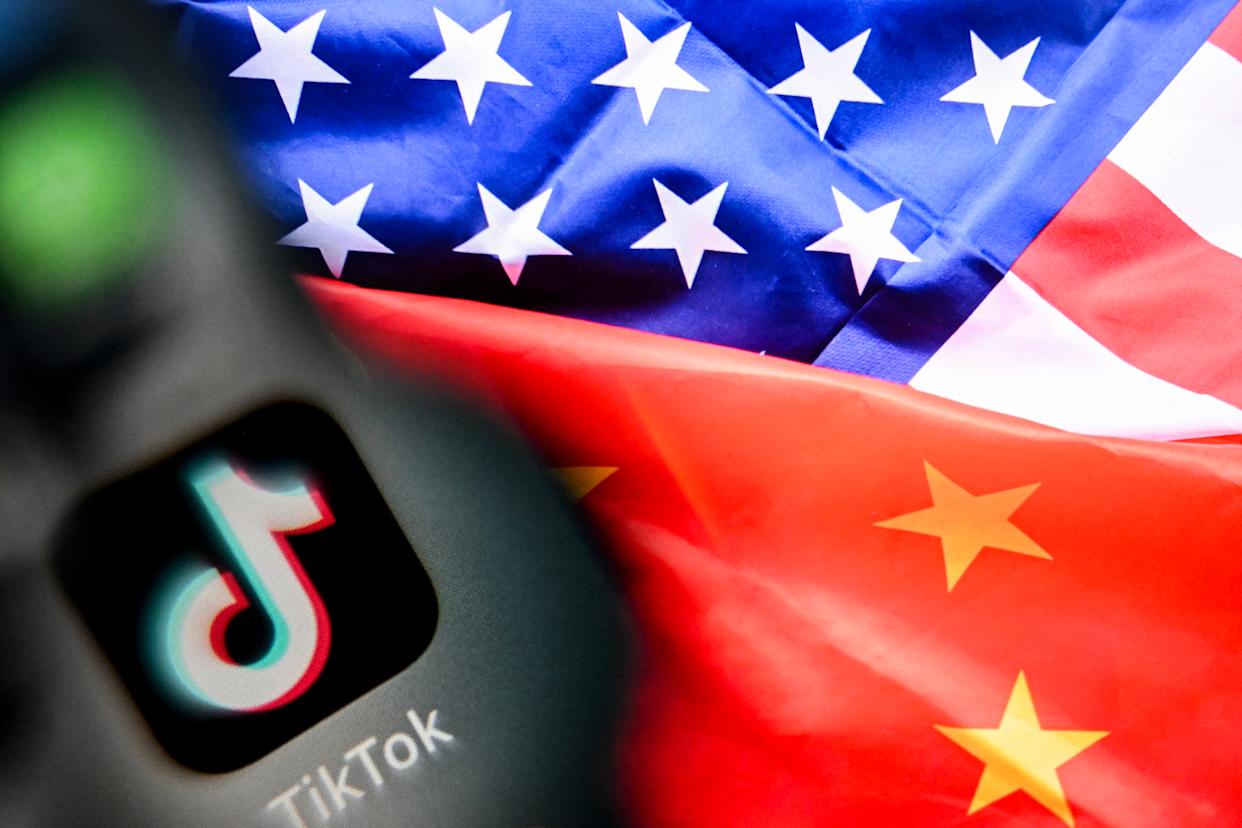
In the span of less than a decade, TikTok has transformed from a seemingly trivial platform for dance challenges and viral trends into one of the most consequential battlegrounds in modern geopolitical conflict. What was once dismissed as entertainment for teenagers has evolved into a sophisticated instrument of statecraft, where governments, military apparatuses, and covert influence networks wage war for the hearts and minds of millions. The “TikTok propaganda war” is no longer a theoretical concern debated in academic circles it has gone viral, quite literally, reshaping how nations project power, how citizens perceive conflict, and how truth itself is contested in the digital age.
This article examines the multifaceted dimensions of TikTok’s role in contemporary propaganda warfare, exploring the mechanisms that make it uniquely powerful, the actors exploiting its architecture, and the profound implications for democratic societies worldwide.
A. How TikTok Became a Weapon of Information Warfare
TikTok’s ascendancy as a propaganda tool stems from a confluence of technological, demographic, and geopolitical factors that distinguish it from predecessor platforms. Unlike Facebook, which operates on a “social graph” connecting users through explicit relationships, or Twitter/X, which functions as a “news graph” prioritizing real-time information dissemination, TikTok generates what researchers term a “content graph” a highly personalized, emotion-driven system that transcends traditional social connections.
This architectural distinction is not merely technical; it is profoundly political. TikTok’s For You Page (FYP) algorithm systematically prioritizes emotional, sensational, and simplified content over context-rich, in-depth analyses. The platform’s recommender system has been described as “aggressively curatorial,” creating an environment where users are progressively exposed to increasingly siloed and extreme content. This algorithmic mechanism has been shown to foster echo chambers that legitimize and normalize far-right narratives, capitalizing on current events and perceived social grievances to create digital spaces promoting ideological cohesion and emotional intensity.
The surveillance-based business model underlying TikTok’s operations provides the foundation for this algorithmic training, using user data to shape content recommendations that maximize engagement. Amnesty International’s research has documented how TikTok’s “For You” page can push users down a “rabbit hole,” repeatedly recommending and amplifying potentially harmful content once they demonstrate interest in similar material prioritizing engagement over safety.
B. State Actors and Covert Influence Operations
The scale and sophistication of state-linked influence operations on TikTok have reached unprecedented levels. Analysis of platform takedown reports from 2024 to 2025 reveals a persistent, adaptive, and often multilingual pattern of covert influence operations, with three nations Russia, China, and Iran accounting for nearly 65% of all disclosed takedowns. The dataset, comprising 844 takedowns and 508,599 removed assets, demonstrates that inauthentic activity on TikTok is not episodic interference but a continuous feature of the global information environment.
The operating models vary significantly by state actor. Russia employs a high-volume, multilingual approach with assets diversified across YouTube, TikTok, Facebook, Instagram, and domains. China shows a similarly broad footprint but with a tighter thematic focus on US-China rivalry, Taiwan, and regional positioning, with assets overwhelmingly concentrated on YouTube. Iran, by contrast, accounts for far fewer assets, centred mainly on domains. These operational distinctions reflect differing strategic priorities, resource allocations, and target audiences.
Moldova’s Security and Intelligence Service has documented how Russia has begun to use TikTok more actively to spread propaganda, with the platform becoming the primary tool for disinformation campaigns previously conducted through Telegram. The goal, according to SIS Director Alexandru Musteata, is to undermine citizens’ trust in democratic institutions ahead of election cycles. Similar patterns have emerged in Romania, where the number of TikTok accounts backing a pro-Russian far-right candidate increased within weeks, outpacing the combined growth of accounts supporting all other candidates over an entire year.
C. Case Studies: Iran, Ukraine, and the Gaza Conflict
The Iranian “Lego Propaganda” Campaign
One of the most striking examples of state-linked TikTok propaganda emerged during the U.S.-Iran conflict in March 2026. Explosive Media, a Tehran-based outlet assessed by Rapid Response Mechanism Canada to be likely linked to Saeed Jalili, Representative of the Supreme Leader at Iran’s Supreme National Security Council, launched a sophisticated AI-generated campaign using Lego-style figures.
The operation’s trajectory illustrates the evolving playbook of digital propaganda. Initially launched in June 2025 with Farsi-language videos featuring human hosts, the campaign received low engagement and was aimed entirely at domestic audiences. However, on March 7, 2026, Explosive Media pivoted to English-language generative AI videos with Lego-style figures. The switch dramatically increased engagement among Western audiences, with RRM Canada estimating that at least 83 million users globally viewed the videos in the first month of the conflict. The total reach was likely closer to 200 million users.
What made this campaign particularly effective was its aesthetic approach. By using Lego figures a universally recognized, ostensibly innocent toy brand the videos bypassed the psychological defenses typically activated by overtly partisan content. The campaign promoted the perspective that Iran had “won the propaganda war,” criticized President Trump’s handling of hostilities, and occasionally targeted Israel and Gulf Arab states. Russian and Iranian state-controlled media accounts amplified the first video on X within the first 12 hours of its release, demonstrating cross-platform coordination.
AI-Generated Despair in Ukraine
The Ukraine conflict has become a laboratory for AI-generated propaganda on TikTok. Since November 2025, a deliberate disinformation campaign has flooded social media with hyperrealistic AI-generated images and videos depicting Ukrainian soldiers laying down arms, weeping, and describing how they were press-ganged into combat. The footage feeds into an atmosphere of doom and despair, showing soldiers in Ukrainian uniforms begging not to be sent to the front or describing Ukrainian forces fleeing destroyed positions.
The technical execution of these videos reveals both the sophistication and the limitations of current AI propaganda. While many videos display technical flaws typical of generative AI irregular body shapes, errors in image blending, a seemingly headless soldier jumping into the air they are becoming increasingly difficult to detect immediately. AFP Fact Check analyzed more than 70 accounts sharing such content across multiple languages, finding that most alleged mobile phone footage from the front appears to be produced using Sora 2, OpenAI’s advanced video generator.
The strategic intent is clear: to undermine trust in reliable information, demoralize Ukrainian audiences, and shape international perceptions of the conflict. The content’s multilingual subtitling ensures it reaches audiences worldwide, from Greek to Polish, and has been picked up in printed media in Russian and Serbian.
The Israel-Gaza Narrative Battle
The Israel-Gaza conflict has exposed the profound narrative asymmetries on TikTok. A study by Cybersecurity for Democracy, conducted in partnership with New York University and Northeastern University, found that for every pro-Israel video posted, roughly 17 pro-Palestinian videos appear on the platform. The average pro-Hamas video received approximately 11,500 views, compared with roughly 2,400 for pro-Israel videos.
However, the researchers cautioned against simplistic interpretations of these averages. The median pro-Palestinian clip had only 472 views, while the median pro-Israel video had 565 views, indicating that a small number of pro-Palestinian videos went viral, skewing the aggregate numbers. “The bulk of the pro-Palestine and pro-Israel videos are getting largely comparable numbers of views,” the researchers noted.
What the study did reveal was a starkly polarized discourse. “There are almost no videos with both pro-Israel and pro-Palestine hashtags in our dataset,” the report stated. “The videos in question sometimes speak to an imagined opponent… but they do not appear to actually talk to one another”. This algorithmic segregation creates parallel information universes where each side’s narrative remains unchallenged by opposing perspectives.
Rutgers University research cited by U.S. Senator Maria Cantwell found that TikTok’s algorithm disproportionately amplified anti-Israel and, by extension, antisemitic content compared with other social media platforms during major geopolitical events. This amplification has raised concerns among lawmakers and Jewish organizations, with the Jewish Federations of North America urging that any deal over TikTok’s sale include concrete steps to address antisemitism on the platform.
D. The Algorithmic Architecture of Radicalization
TikTok’s algorithmic mechanisms are not neutral conduits for content; they are active instruments shaping, amplifying, and manipulating narratives during global crises. The platform’s For You Page systematically prioritizes emotional, sensational, and simplified content, fostering polarized narratives and undermining constructive dialogue. This mechanism not only engineers public understandings of reality but also directly influences conflict outcomes by affecting public morale, political mobilization, and international legitimacy.
European non-profit AI Forensics conducted a revealing investigation during the June 2025 NATO summit in the Hague. Using 12 TikTok accounts based in the Netherlands, researchers compared suggestions on the For You Page against search results before and after the summit. They found that while most content was originally neutral, it quickly became more explicitly about military conflict, war scenarios, and speculation about a third World War. Forty per cent of the videos on the For You Page showed military and weapons content, and another 19 per cent dealt with the potential of war. The report concluded that “the FYP favoured glorified military content and fearful war speculation”.
This algorithmic amplification has profound implications for democratic societies. As the report warned: “A departure from facts, and a move in the direction of celebratory military and fearful war speculation content, can potentially reinforce war rhetoric”. The convergence of algorithmic recommendation and state-sponsored content creation creates a feedback loop that accelerates radicalization and normalizes extremism.
E. The White House’s Meme Warfare
The United States has not been a passive observer in the TikTok propaganda war. The Trump administration has embraced the platform as a tool for promoting military actions, particularly during the conflict with Iran. Clips from the NFL, SpongeBob SquarePants, and Call of Duty have been spliced together with scenes of military strike footage, racking up millions of views on TikTok. President Trump’s team describes this as a modern way to get their message across to young audiences and showcase military successes.
The strategy represents a significant departure from previous approaches to wartime communication. Anthony Zurcher, the BBC’s North America correspondent, noted how this compares to tactics previous US governments have used to depict conflicts. Social psychology Professor Sander van der Linden from Cambridge University has warned about how these hype videos can affect public perception of war, potentially trivializing the human cost of conflict.
The use of memes and popular culture references to promote military action raises uncomfortable questions about the boundaries between entertainment and propaganda. When war becomes content when strike footage is edited to the rhythm of a TikTok trend the distinction between informing the public and manipulating it becomes dangerously blurred.
F. Platform Responses and the Limits of Moderation
TikTok has taken steps to address inauthentic activity on its platform, but the effectiveness and consistency of these measures remain contested. The platform disclosed 844 takedowns from 2024 to 2025, removing hundreds of thousands of assets linked to covert influence operations. However, researchers note that these removals represent only a fraction of the total activity, as many operations adapt and evolve faster than platforms can respond.
The platform’s content moderation practices have also faced criticism for inconsistency and potential political bias. A European Parliament question raised concerns about TikTok’s removal of accounts during the 2023 Slovak parliamentary elections, where the European Commission reportedly sent TikTok a spreadsheet identifying at least 63 “problematic” accounts, some of which were explicitly noted as complying with community guidelines. Nineteen of these accounts were banned, with others placed on watchlists. Some banned accounts were flagged for alleged hate speech containing statements like “there are only two genders” or characterizing LGBTI ideology as a threat to Slovakia.
Concerns about censorship have intensified following TikTok’s restructuring under a U.S.-based joint venture. Users have reported suppression of content regarding ICE violence and the Jeffrey Epstein case, though researchers have not found evidence of widespread systematic suppression. The uncertainty surrounding algorithmic moderation where the relationship between what is allowed and what is actually permitted remains opaque creates an environment where users modify their language and content preemptively, a phenomenon known as “chilling effects”.
G. The Global Impact and Democratic Implications
The viral propaganda war on TikTok has profound implications for democratic governance worldwide. The platform has become a primary vector for foreign interference in elections, as documented in Moldova, Romania, Slovakia, and beyond. The speed at which coordinated inauthentic networks can be deployed the Romanian case saw pro-Georgescu accounts outpace all other candidates’ growth within weeks demonstrates how quickly the information environment can be manipulated.
The algorithmic amplification of divisive content exacerbates existing social fractures. TikTok’s user base skews young, and the platform’s emotional, sensational content prioritization means that young people are disproportionately exposed to polarized narratives before they have developed robust media literacy skills. The research showing that 50% of Republicans under 50 and 71% of Democrats under 50 hold negative views of Israel suggests that generational attitudes are being shaped in part by algorithmic exposure.
The geopolitical dimension of the TikTok propaganda war cannot be separated from the platform’s ownership structure. The recent sale of TikTok’s U.S. operations to a consortium of American and international investors, including pro-Israel billionaires and UAE royals, has raised concerns about narrative control. Observers have suggested that the deal was partly motivated by a desire to control narratives on Israel following the Gaza war, particularly given the overwhelming pro-Palestinian sentiment documented on the platform.
H. Media Literacy in the Algorithmic Age
The challenge posed by TikTok’s propaganda architecture demands a fundamental reconceptualization of media literacy. Traditional approaches teaching people to identify fake news, check sources, and verify claims are necessary but insufficient when the algorithmic system itself is designed to prioritize engagement over accuracy and emotional resonance over factual content.
Researchers argue that understanding the “TikTok tactic” is vital for analysts, governments, and citizens seeking to confront contemporary information warfare. This requires moving beyond individual-level interventions to address structural issues embedded in platform design and business models. As Amnesty International has documented, the surveillance-based business model that powers TikTok’s recommender systems creates inherent incentives to amplify harmful content in pursuit of user engagement.
Effective responses must therefore combine several approaches:
A. Regulatory frameworks that require algorithmic transparency and accountability, enabling researchers and regulators to audit recommendation systems.
B. Platform design changes that prioritize user safety over engagement metrics, breaking the feedback loops that drive radicalization.
C. Educational initiatives that teach algorithmic literacy not just how to evaluate content, but how recommendation systems shape what content users see.
D. International cooperation to address state-sponsored information operations, recognizing that this is a shared challenge transcending geopolitical rivalries.
E. Support for independent journalism and fact-checking organizations that can provide context-rich analysis in an environment dominated by simplified, emotional content.
I. Conclusion: The Viral War for Truth

The TikTok propaganda war represents a qualitative shift in how information warfare is conducted. Unlike previous eras where propaganda was disseminated through centralized media channels with identifiable editorial control, today’s propaganda operates through decentralized, algorithmically mediated networks that blur the boundaries between entertainment and indoctrination, between authentic expression and manufactured consent.
The viral nature of this warfare its capacity to reach hundreds of millions of users within days, to adapt to local languages and cultural contexts, and to exploit the psychological vulnerabilities that engagement-optimized algorithms inherently create makes it an extraordinarily potent tool for state and non-state actors alike. The Iranian Lego campaign reaching 200 million users, the AI-generated Ukrainian despair videos spreading across multiple continents, the 17-to-1 ratio of pro-Palestinian to pro-Israel content these are not aberrations but harbingers of a new normal.
Addressing this challenge requires acknowledging uncomfortable truths. First, the problem is not merely foreign interference; domestic actors, including governments, have embraced TikTok as a tool for shaping public perception, as the White House’s meme warfare demonstrates. Second, the problem is not merely content; it is the algorithmic architecture that determines what content users see and how they encounter it. Third, the problem is not merely technological; it is deeply political, rooted in the business models, ownership structures, and regulatory frameworks that govern platform operations.
The TikTok propaganda war has gone viral, and there is no simple vaccine. What remains is the difficult, ongoing work of building resilience in individuals, in institutions, and in the information ecosystems that sustain democratic societies. The battle for truth in the algorithmic age has only just begun.